
Google Search Ads help a business respond to demand people have already expressed. Demand Gen plays a different role: it helps brands reach people before or while they form purchase intent.
It is an audience-led visual campaign type that can distribute ads across YouTube, Discover, Gmail, and the Google Display Network. It can support prospecting, remarketing, and demand creation, but it is not the right starting point for every goal or budget.
What Google Demand Gen is
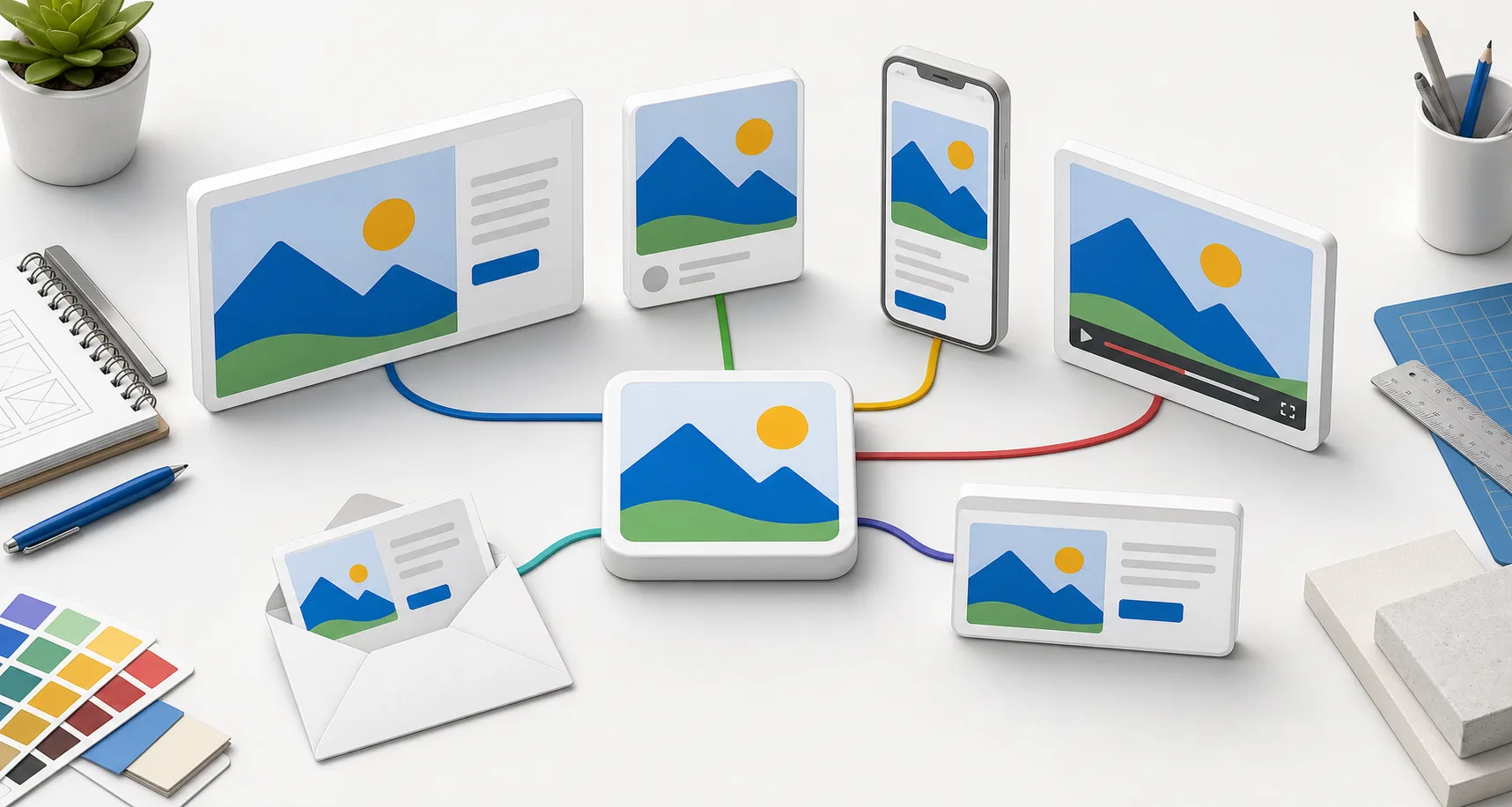
Demand Gen is a Google Ads campaign type designed to generate interest and action across Google’s visual surfaces.
Unlike Search, which primarily responds to the terms a person searches for, Demand Gen starts with audiences, intent signals, creative assets, and the selected conversion goal.
Confirmed by Google: Demand Gen campaigns can run across YouTube, including Shorts, Discover, Gmail, and the Google Display Network. Google also provides channel controls so advertisers can choose where a campaign serves.
Practical interpretation: Demand Gen behaves more like paid social than paid search. Results depend heavily on image and video quality, audience choices, and the way conversions are measured.
Where Demand Gen ads can appear
Depending on campaign settings and available assets, ads can appear across:
- YouTube, including in-feed, in-stream, and Shorts
- Discover
- Gmail
- Google Display Network
Channel controls matter. A vertical video may perform well in Shorts, while a landscape image may produce a different result in Discover or across GDN.
Do not assume every channel serves the same purpose. Review spend distribution and outcomes by channel, then expand only where the evidence supports it.
How Demand Gen works
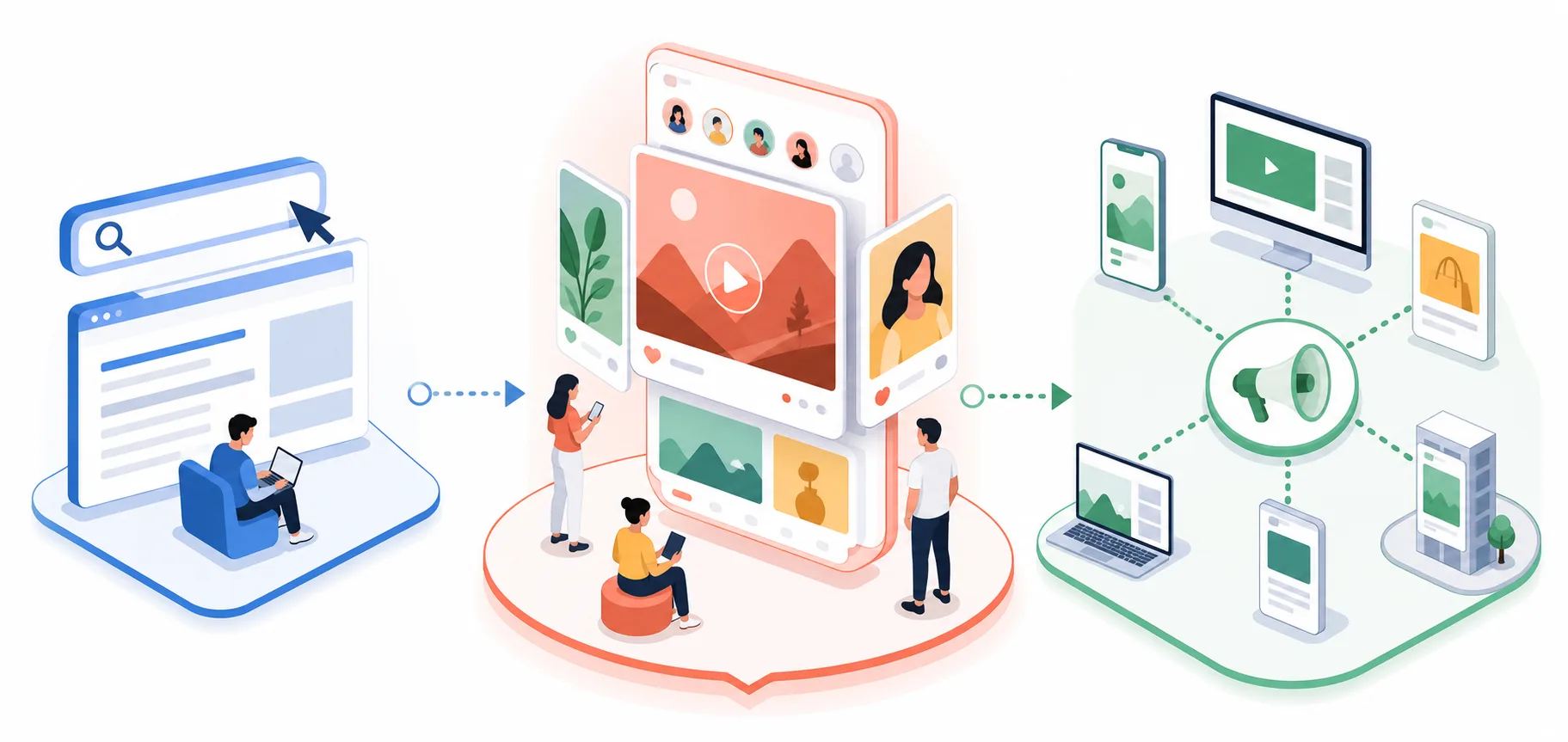
A campaign combines four core elements:
- Goal: for example, sales, leads, or relevant traffic.
- Audience: the people you want to attract or bring back.
- Creative: images, video, logo, headlines, descriptions, and calls to action.
- Measurement: the conversions and values used for optimization.
Google uses automation for bidding, distribution, and asset combinations. Automation can accelerate testing, but it cannot repair a weak offer, an unclear landing page, or incorrectly configured conversions.
Demand Gen vs Search
Search and Demand Gen address different moments.
Search reaches people actively looking for a product, service, or answer. It is generally better suited to capturing existing intent.
Demand Gen reaches audiences while they consume content and discover options. It is better suited to creating and developing interest.
For many businesses, the two campaign types complement each other:
- Demand Gen introduces the offer and builds interest
- Search captures searches generated later
- remarketing brings back visitors who did not convert
Demand Gen vs Performance Max
Performance Max can distribute ads across Google’s inventory and uses broad automation to pursue performance goals.
Demand Gen focuses on visual experiences and provides channel controls across YouTube, Discover, Gmail, and GDN.
Practical interpretation: choose Demand Gen when you need an audience-led visual campaign and want control over the channels it uses. Performance Max may be more suitable when the goal is to access Google inventory through one campaign and the account has sufficient data and assets.
Do not run both without a measurement plan. Otherwise, the platforms may report positive results without showing what caused genuine incremental growth.
Demand Gen vs Display
Display has traditionally been used for banners, remarketing, and reach across websites and apps in the Google Display Network.
Demand Gen provides a broader environment for visual campaigns, combining image and video formats, audiences, and access to more Google surfaces.
On May 26, 2026, Google announced that Display ad management will move into Demand Gen, with the transition expected to be completed by 2027. The practical implications are covered in our guide to Google Display Ads moving to Demand Gen.
When Demand Gen is worth using
Demand Gen is worth testing when:
- you want to attract new customers, not only respond to existing searches
- the offer can be communicated visually
- you have relevant images and video
- you have enough traffic or first-party data to create useful audiences
- conversion tracking is reliable
- you can allocate a separate testing budget
- you want remarketing coverage across multiple visual surfaces
It can suit ecommerce, services with longer consideration cycles, new products, events, educational content, and offers that benefit from demonstration.
When it should not be your first choice
Demand Gen is usually not the first channel to launch when:
- the budget is very limited and clear Search demand already exists
- you do not have quality image or video assets
- conversion tracking has not been audited
- the landing page does not explain the offer
- lead quality cannot be evaluated
- you need immediate results from a high-intent audience
In those cases, repairing the fundamentals or launching a well-structured Search campaign may deserve priority.
Which audiences can you use?
Demand Gen can use audiences built from:
- eligible first-party lists, including customers or website visitors
- similar audiences called lookalike segments
- interests and behaviors
- custom segments built around relevant intent
- remarketing
Do not combine every audience automatically. Separate prospecting from remarketing, and exclude existing customers when the objective is new-customer acquisition.
What creative assets should you prepare?
Demand Gen depends on visual content. Prepare at least:
- square and landscape images
- vertical images for mobile experiences
- short video, including vertical video
- a legible logo
- headlines that explain the offer
- descriptions with a concrete benefit
- appropriate calls to action
Use assets that show the real product, service, or outcome. Generic visuals may generate impressions while giving people little reason to act.
Measurement matters more than click volume
Demand Gen can influence someone before they search directly for the brand or convert through another channel. Judging it only by clicks may therefore be incomplete.
Platform reports should not be accepted without verification either. Monitor:
- primary conversions and their value
- cost per conversion
- sales or qualified leads
- channel and creative performance
- assisted conversions, where relevant
- differences between prospecting and remarketing
- actual CRM or sales outcomes
Read the guide to what businesses should measure in digital marketing campaigns.
How to launch a controlled test
A Demand Gen test should answer a clear question, not simply spend a new budget.
- Choose one business objective.
- Audit conversion actions and their values.
- Separate prospecting from remarketing.
- Prepare multiple creative variants.
- Select channels appropriate to the test.
- Define the budget, duration, and intervention thresholds.
- Use a relevant landing page.
- Review conversion quality, not only volume.
- Expand only after results have been validated.
For paid campaigns, a dedicated landing page is usually more effective than a homepage.
Common mistakes
The most common problems occur when advertisers:
- launch without verified tracking
- use the same ad across every format
- combine audiences with different intent
- optimize toward conversions with little commercial value
- automatically accept every recommendation
- increase budgets before reviewing leads or sales
- compare Demand Gen only with Search last-click results
Demand Gen does not remove the need for strategy. It turns strategy into a combination of audiences, content, measurement, and automation control.
Final takeaway
Google Demand Gen is designed for businesses that want to create demand and reach audiences through visual content across YouTube, Discover, Gmail, and GDN.
It is worth testing when the offer, creative assets, landing page, and measurement are ready. It should not be treated as an automatic replacement for Search, Display, or Performance Max, but as a tool with a defined role in the acquisition strategy.
At CloudStack Solutions, we build campaigns with audited tracking, channel-specific creative, and optimization focused on commercial outcomes. Explore our Digital Marketing services.