Ads Inside GPTs: Why AI Advertising May Behave More Like Search Than Display
 Theodor Hanu · June 16, 2026
 AI assistants are creating a different kind of advertising moment

If ads become a normal part of GPT-style assistants, I expect many of them to convert closer to high-intent search than to classic display advertising.
Not always. Not in every category. And not automatically.
The opportunity is not that the ad format will magically be better. It is not that a sponsored answer will automatically deserve more trust. And it is definitely not that users are waiting for more ads inside tools they use to think, compare and decide.
The real reason is context.
By the time an ad appears in a GPT-style conversation, the user may have already described the problem, the situation, the constraints, the desired result, the budget range, the timing and sometimes even the internal objections.
That is very different from a banner impression.
In display advertising, you often interrupt someone who is doing something else. In search advertising, you respond to a query. In AI assistant advertising, if implemented carefully, the commercial message can appear after the user has already built a miniature brief.
This is what I would call checkout-adjacent attention. Not because the user is always ready to buy immediately, but because they are often working through the last practical questions before action.
That distinction matters. Intent is not only expressed through a keyword. Intent is also expressed through context, hesitation, comparison and specificity.
This is closer to search because the user is pulling, not being pushed
The biggest difference between search and display is not the ad unit. It is the user’s posture.
In search, the user pulls information toward them:
- “best CRM for small business”
- “emergency electrician near me”
- “Shopify agency pricing”
- “how to automate invoice processing”
That pull creates commercial intent.
Display is usually different. The platform pushes a message into attention that was already allocated elsewhere. Sometimes it works very well, especially for remarketing, category creation and visual products. But the baseline is interruption.
GPT-style interaction is closer to search because the user is still pulling. The query is just longer, messier and more useful.
Instead of typing “best accounting software”, the user might say:
“I run a small agency with five people, I need accounting software that works with Romanian invoices, handles recurring retainers, does not require a full-time accountant and costs under a few hundred euros per month. What should I compare?”
That is not a keyword. That is a buying brief.
For an advertiser, that kind of context is much more valuable than a broad audience segment. The system can understand not only that the user is in-market, but also why, for whom, under what constraints and with what trade-offs.
But it is not exactly search either
This is where I think marketers need to be sober.
AI assistant advertising may behave more like high-intent search than display, but it will not be identical to search.
Search ads usually sit next to alternatives. The user can scan several results, compare snippets and decide which link deserves a click. There is a visible marketplace.
In a conversational interface, the assistant often compresses the marketplace. It may summarize options, recommend a shortlist, explain trade-offs and influence the decision path before the user ever reaches a website.
That makes the placement powerful, but also delicate.
If the sponsored recommendation feels inserted for the advertiser’s benefit rather than the user’s benefit, trust can drop quickly. A bad search ad is easy to ignore. A bad recommendation inside an assistant can feel more invasive because it enters a conversation where the user expects help, not persuasion.
This is why transparency will matter. Relevance will matter. The line between “useful commercial suggestion” and “paid manipulation” will be thinner than it is in many existing ad environments.
The strongest signal is not the prompt. It is the conversation
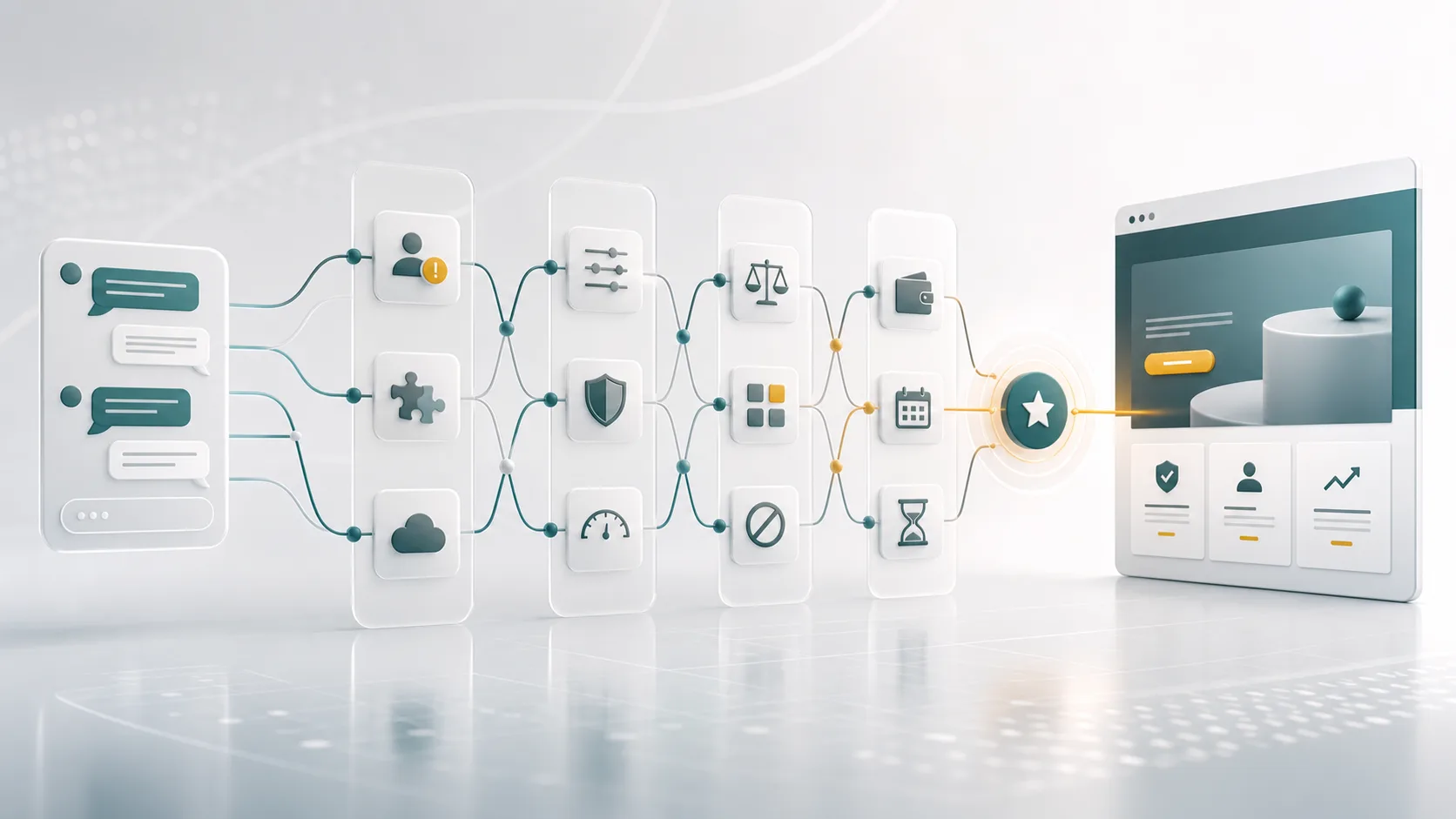
In classic PPC, we obsess over keywords, match types, audiences, landing pages and conversion tracking. Those things still matter, but AI assistants add another layer: the conversation path.
A single prompt may not tell the full story. The user might begin broadly, then narrow:
- first they describe the problem
- then they compare approaches
- then they reveal a budget constraint
- then they reject one category
- then they ask for vendors, tools or next steps
That sequence is valuable because it shows decision maturity.
In my experience, this is where many campaigns already fail in normal paid media. They treat a first click as if it came from a fully formed buyer. But most people move through ambiguity before they move through a checkout or contact form.
AI assistants make that ambiguity visible.
If ad platforms can use that signal responsibly, the quality of matching could improve. A user asking “what is marketing automation?” is not the same as a user asking “which automation setup should I use for my clinic if I already have HubSpot and a limited admin team?”
Both are interested. Only one is near implementation.
Why this could improve conversion rates
There are several reasons ads inside AI assistants could convert well.
First, the assistant has more context than a search engine usually gets from a short query. That can reduce wasted clicks.
Second, the user may be closer to a decision by the time a commercial option appears. They have already been educated, compared alternatives and clarified constraints.
Third, the ad can be matched to the problem, not only to the category. That is a big difference. “Project management software” is a category. “Project management software for a construction company with field teams and subcontractors” is a problem context.
Fourth, the assistant can lower friction. It can explain why an option fits, what to watch out for and what question to ask the vendor. That can make the next step feel more natural.
But there is a condition: the recommendation must be genuinely useful.
If AI ad placements become another version of low-quality display inventory, users will learn to distrust them. The conversion advantage will disappear. The channel will still have reach, but not confidence.
Why advertisers should not treat this as a cheap traffic source
The wrong reaction is to think: “Great, another placement. Let’s push the same ad copy there.”
That will not be enough.
In this environment, the advertiser is not only competing for a click. They are competing to be a credible answer to a specific situation.
That means the fundamentals become more important:
- clear positioning
- honest pricing signals
- precise service pages
- strong comparison content
- proof that matches the user’s context
- fast, relevant landing pages
- clean tracking and lead qualification
This connects directly with how to choose the right digital marketing channel and with what to measure in digital marketing campaigns. The channel is only as useful as the measurement discipline behind it.
If a business cannot explain who it is for, why it is different and what outcome it creates, AI placement will not fix that. It may expose the weakness faster.
The website still matters
Some people assume that AI assistants will make websites less important. I think the opposite is more likely for serious buyers.
The assistant may influence discovery and comparison, but the website remains the place where trust is confirmed.
Before a person books a call, requests a quote or buys, they still need to see:
- what the company actually does
- who it has helped
- what the process looks like
- what the approximate cost is
- whether the offer fits their situation
- whether the business looks real and reliable
This is why landing pages matter for paid ads. If AI sends a user with a very specific problem to a generic page, the context is lost. The ad did its job, but the site failed to continue the conversation.
In AI-driven advertising, the landing page may need to become more contextual, not less.
The risk: ads that borrow trust from the assistant
There is also a serious risk here.
People use AI assistants differently from social feeds. They often ask private, practical or high-stakes questions. They may feel like they are receiving advice, not browsing media.
That creates a trust problem.
If sponsored suggestions appear without clear labeling, or if they distort the answer, users will push back. And they should.
From a market perspective, this is where the best platforms will need discipline. The short-term revenue temptation will be high. The long-term value depends on preserving user trust.
For advertisers, this means the bar should be higher too. The goal should not be to sneak into the answer. The goal should be to deserve inclusion when the user’s context truly fits.
That is a different mindset from buying impressions.
What I would prepare now
If I were preparing a business for this type of ad environment, I would not start with ad copy.
I would start with the offer.
Can the business explain its best-fit customer clearly? Can it state who it is not for? Can it show proof by industry, problem, budget range or use case? Can it answer comparison questions honestly?
Then I would look at content structure.
AI systems work better with clear, specific and well-organized information. Service pages, FAQs, comparison pages, case studies and pricing explanations all become useful inputs.
Then I would look at measurement.
AI-referred traffic may not behave like classic search traffic. Some conversions may be assisted. Some users may arrive more educated. Some may skip several traditional funnel steps. Tracking needs to account for that.
Finally, I would look at sales handling.
If a lead arrives after a detailed AI-assisted research session, the first human response should not restart the conversation from zero. It should continue from the problem the user already clarified.
My take
The important shift is to stop looking only at the ad unit and start looking at the user’s state of mind.
Ads inside GPT-style assistants could convert closer to high-intent search because the user is not just browsing. They are working through a decision. They are explaining the problem. They are exposing constraints. They are asking for help at a moment that can be very close to action.
But the channel will only work if it respects that moment.
The winners will not be the advertisers who shout the loudest. They will be the ones whose offer, content, proof and landing experience make sense inside a specific decision context.
That is why I see this less as “AI ads” and more as a new form of intent matching.
And intent matching has always rewarded clarity.